
[TAKEN] Someone Else in the Mirror: Transforming Face and Voice with Generative AI
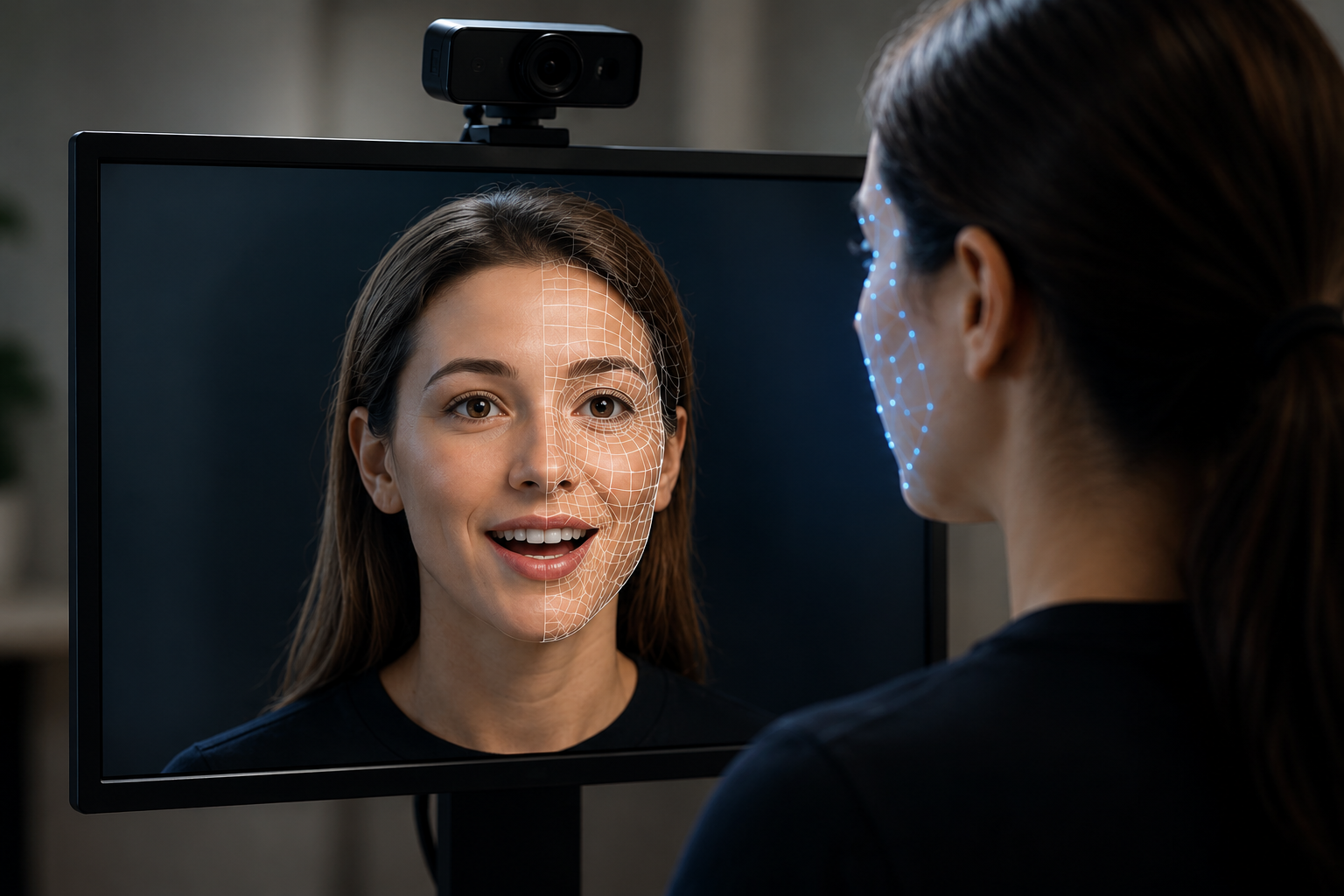
Recent advances in generative AI make it possible to realistically transform both a person’s face and voice while preserving their underlying behaviour. This project will develop an interactive AI virtual mirror in which participants see their face transformed into another photorealistic identity while their own facial expressions and head movements drive the generated face. The … Read more

Explaining Survival Predictions with Shapley Values (taken)

Machine learning models are increasingly used to predict time-to-event outcomes — for example, how long a patient might survive after treatment or when a machine is likely to fail. Unlike standard predictions, these models produce survival curves, which change over time. Existing explanation tools like Shapley values can tell us which features matter, but they … Read more

[TAKEN] Fairness and Robustness in Risk Detection Models (2 Projects)

Risk detection models (such as IBM’s Granite Guardian) are increasingly used to flag harmful prompts and responses in large language model pipelines. These systems are trained on human and synthetic data to identify risks across multiple dimensions, but their reliability and fairness are not guaranteed. They may over-flag certain groups, miss subtle harms, or be … Read more

[TAKEN] Debugging Classifications with Counterfactual Explanations

This project investigates how post-hoc counterfactual explanations can be used to debug opaque models such as deep neural networks by revealing which feature changes most influence predictions. In applications like anomaly detection, counterfactuals help clarify why certain cases are flagged as abnormal and expose when models rely on spurious correlations or biased patterns. By using … Read more

Machine learning for fibre disturbance detection via state of polarisation sensing – Taken, no longer available

Project Description: Optical fibre networks are critical to global connectivity, yet they are susceptible to accidental damage or deliberate tampering. While distributed acoustic sensing (DAS) has been widely investigated for disturbance detection, an alternative approach relies on monitoring the state of polarisation (SOP) of light propagating in the fibre. The SOP is highly sensitive to … Read more

Machine learning application to fibre sensing in maritime applications – Taken, no longer available

Project Description: Recent advances in distributed fibre sensing have shown that existing optical fibre cables, originally deployed for telecommunications, can also serve as dense sensor arrays. By sending probe signals through the fibre and analysing the backscattered light, it is possible to extract information about environmental changes such as vibrations, temperature, and strain along the … Read more

[TAKEN] Intersectional Fairness in Machine Learning

This project focuses on the rich field of algorithmic fairness where the goal is to ensure that predictions are not biased against subgroups of the population whilst maximising predictive performance. One challenge is when we focus on multiple protected attributes.

Perceptual Adaptation to a Speaker’s Voice (taken)

Speech perception is not static. Within seconds of hearing a new voice, the brain begins to adapt. Recent analysis across multiple datasets (Valdes et al., 2025) shows that cortical tracking of the sound acoustics drops markedly within the first 20 seconds of exposure of a familiar voice. However, when listeners encounter a genuinely novel speaker, … Read more

Individualised project in Wireless networking, Machine Learning, Artificial Intelligence, Quantum Computing (and associated application domains)

I am happy to supervise a project in all the areas of computer networking that I am interested in — wireless networking, Machine Learning, Artificial Intelligence and in their application to a wide range of real world settings (healthcare, IoT, structural health monitoring). I am particularly interested in exploring some aspects of quantum computing; for … Read more

Can your eyes listen? (taken)

By listening to speech and measuring brain activity, we can investigate how different aspects of spoken language are encoded and processed by the brain. However, much less is known about whether eye movements and gaze behaviour also reflect how we listen to and understand speech in complex noisy environments. Recent research suggests that gaze may … Read more