Understanding Social Behaviour from the Seamless Interaction Dataset
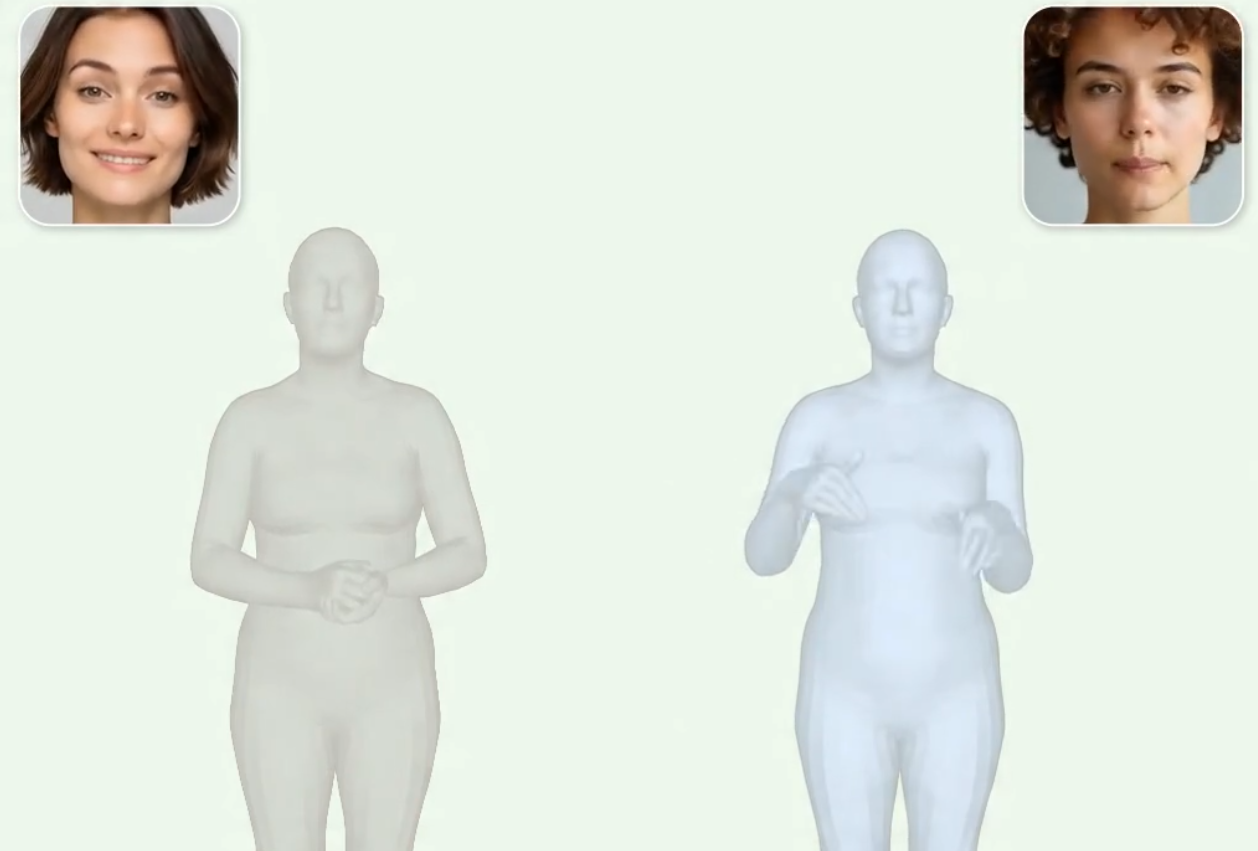
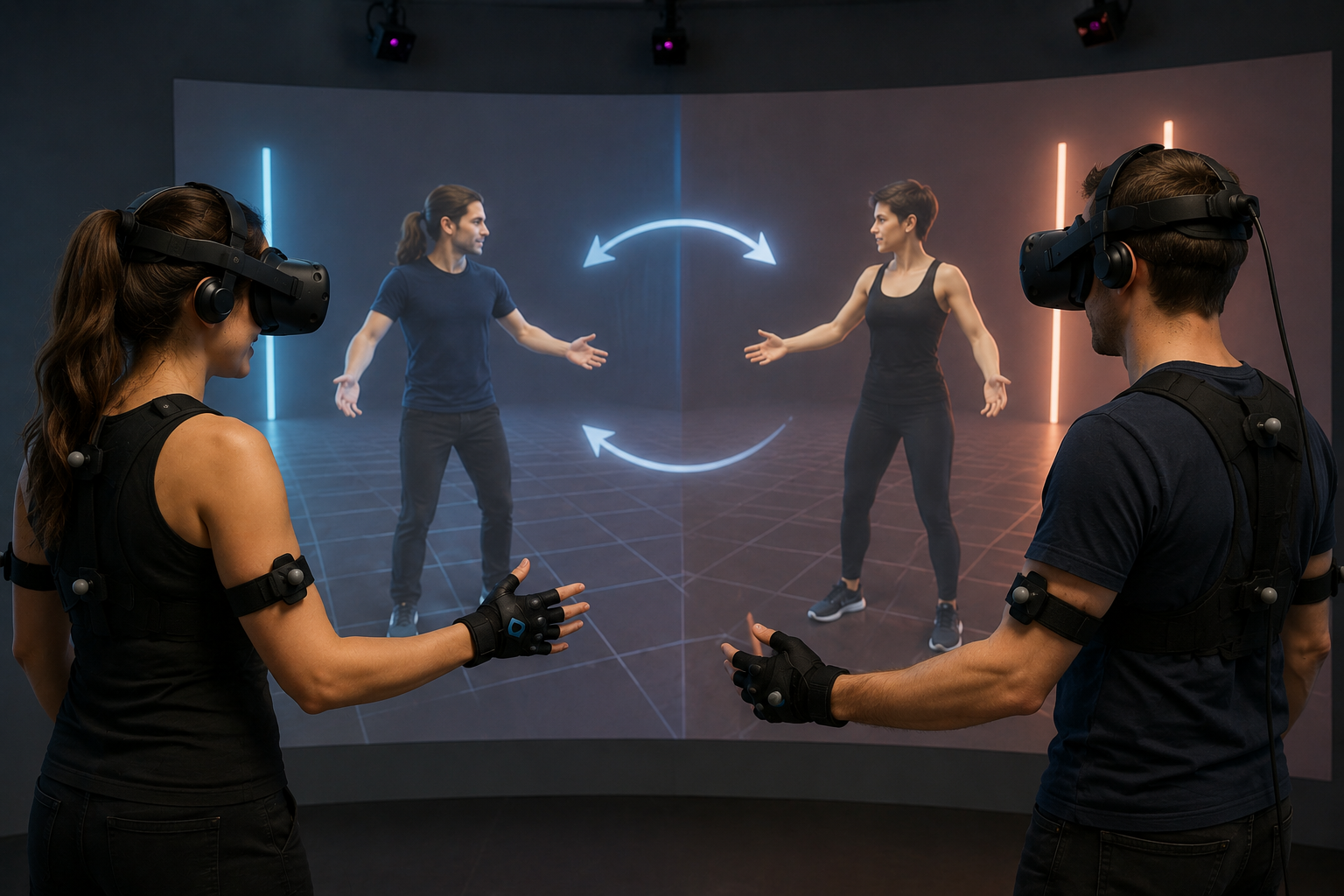
How do two people coordinate their movement, gaze, gestures and speech during a conversation, and what can these behaviours tell us about the social interaction taking place? In this open-ended project, the student will use Meta’s Seamless Interaction dataset, a large-scale multimodal dataset of face-to-face interactions containing processed body motion, facial behaviour, gaze, audio, speech … Read more
Feel the Motion: Haptics for Embodying a Different Virtual Body

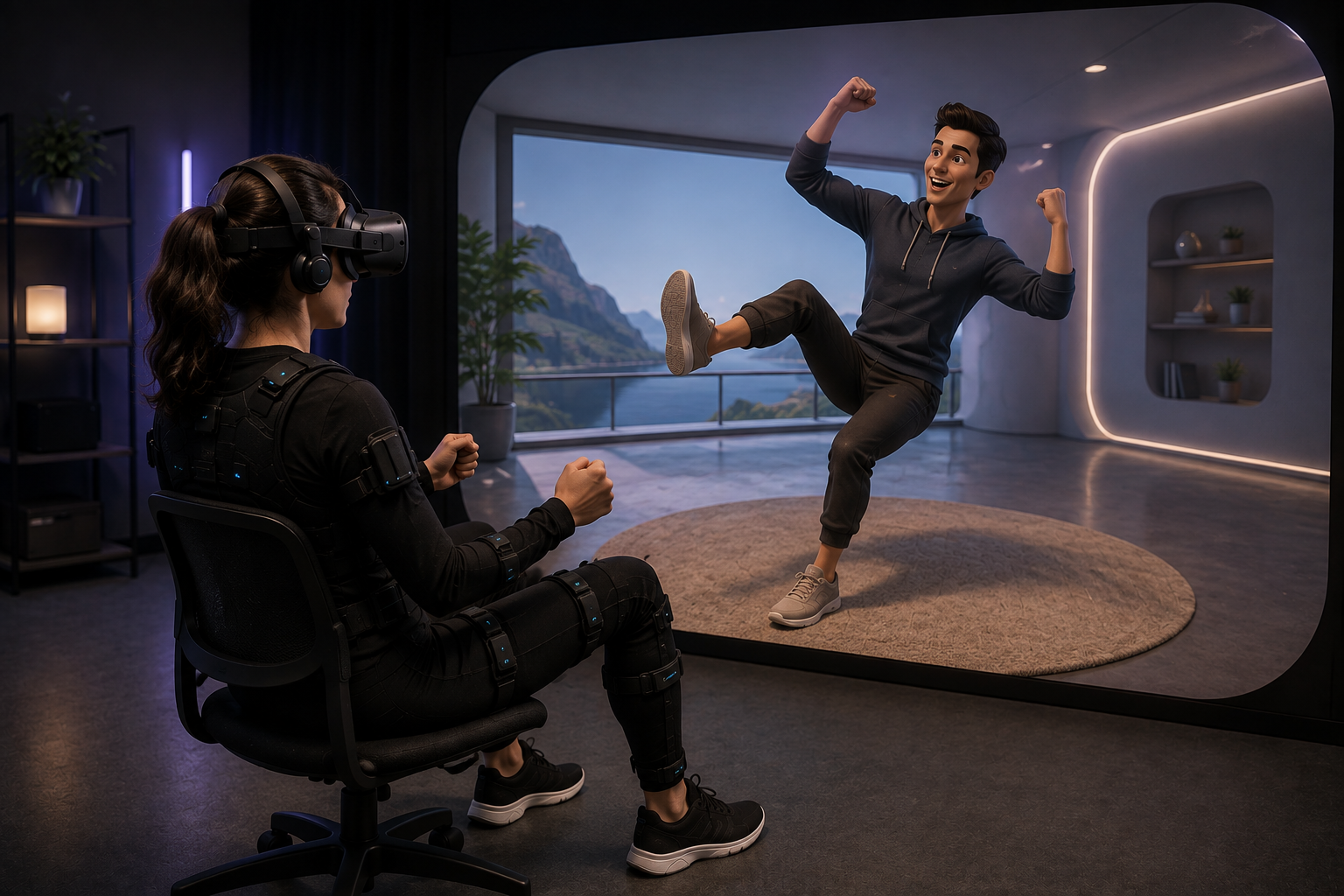
In Virtual Reality, strong embodiment is usually achieved by making an avatar closely reproduce the user’s physical movements. But what happens when the virtual body does not move in the same way as the real body? Can haptic feedback help users accept unfamiliar virtual movements as their own? In this project, the student will develop … Read more

The AI Museum Guide: Social Characters for Multiplayer VR

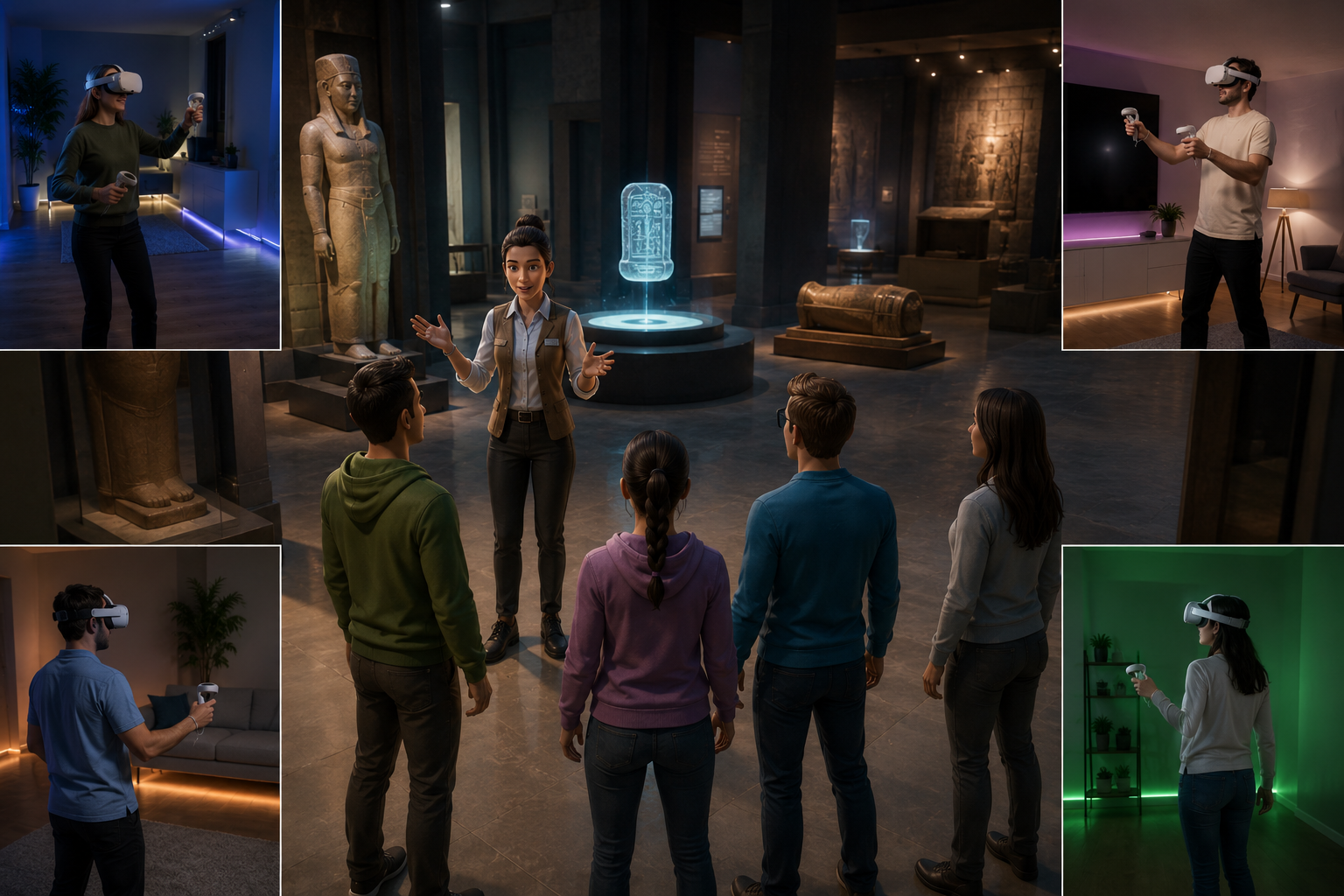
Imagine visiting a virtual museum as a family after closing time, where the exhibits have mysteriously come to life and an AI-driven virtual museum guide needs your group’s help to discover what has happened. This project will develop a short multiplayer VR experience for 3–4 players, in which a MetaHuman guide dynamically responds to the … Read more

AI Crowd Motion: Generating Diverse Animation from Crowd Trajectories

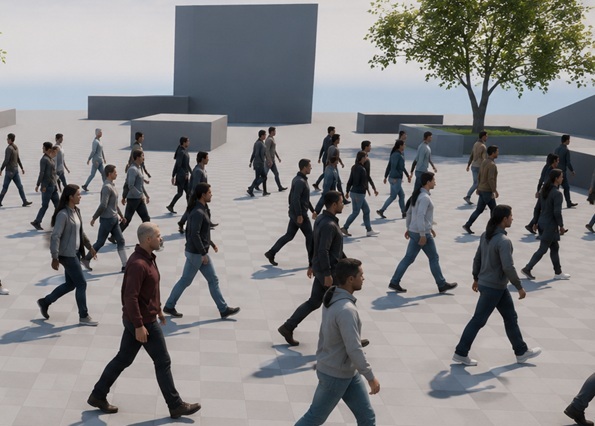
Virtual crowds typically rely on a limited set of motion-capture clips, which can lead to visible repetition and reduce the perceived diversity and realism of the crowd. This project will investigate whether Epic Games’ new AnimGen generative animation framework can be used to create more varied and individualised motion for virtual crowds. The student will … Read more

Move Like Me: Individuality in Generative Character Animation

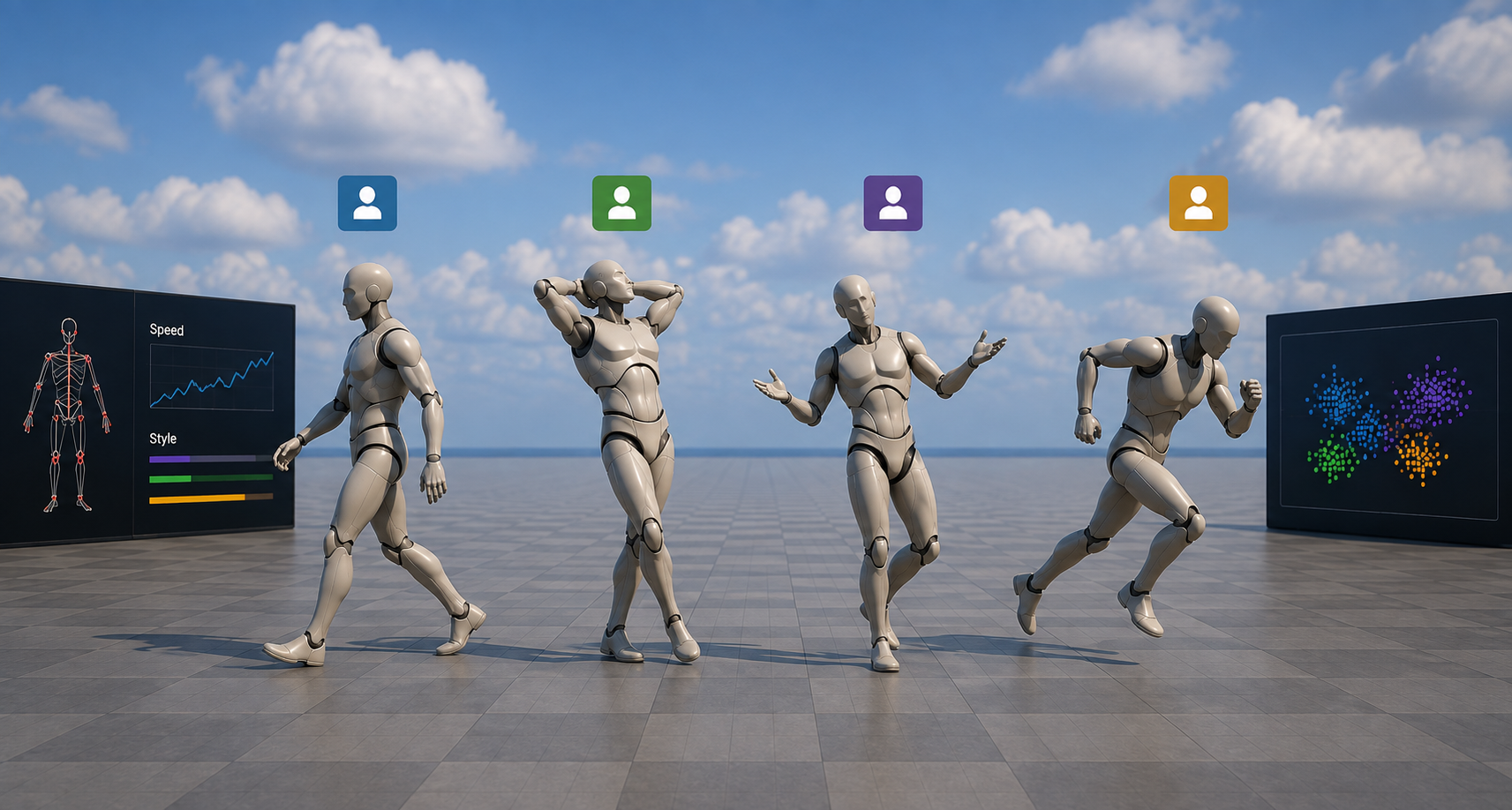
People perform the same actions in subtly different ways, creating an individual motion signature. This project will investigate whether these characteristics are preserved—or lost—when human motion is learned by a generative animation model. Using Epic Games’ new AnimGen framework and the HiPHI motion-capture dataset, the student will select a small number of performers performing similar … Read more

Generative AI for Character-Object Interaction

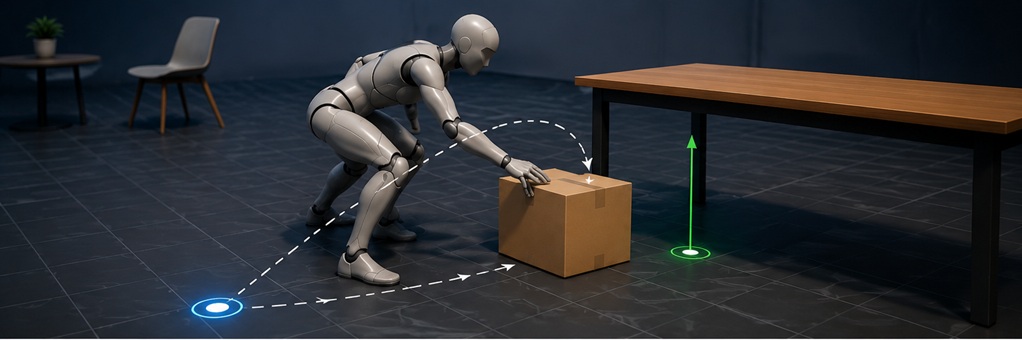
Recent generative animation models can create realistic character motion rather than simply replaying existing animation clips. In this project, you will use Epic Games’ new AnimGen framework and motion-capture data from the large-scale HiPHI dataset to investigate human-object interaction. The student will select a manageable subset of interactions, such as approaching, reaching for, picking up … Read more

[Unavailable] Gaze and Navigation: User Responses to Mutual and Averted Gaze in Virtual Crowds

This project will investigate how two core gaze behaviors, mutual gaze and gaze cueing, influence user behavior and attention in dynamic virtual environments. In real-world interactions, direct eye contact increases social presence and engagement, while observing another person’s gaze direction can automatically shift our own attention. Using immersive virtual reality, this study will simulate a … Read more

[Unavailable] Deep Fake Enfacement Experiment

  [MSc Level] This project will involve creating a real-time enfacment system from the state of the art deep-fake networks, and conducting perceptual experiments to identify if participants have ownership of their new face, and if properties of the source-actor (e.g., age, gender, etc.) can be perceived, even though the generated video is a photorealistic … Read more

[Unavailable] Non-verbal behaviours for speaking virtual avatars

[MSc level] Virtual assistants are becoming commonplace but the ability for them to gesture naturally and appropriately is still a huge research challenge (see image which shows a typical assistant displayed from the neck up, without gesturing arms and hands). In this project, you will develop a method to automatically learn structure from speech sequences … Read more